For partners
A better first conversation starts with a clear brief.
The practical information to bring to a brand or distribution inquiry, even when your plans are still taking shape.
Begin with the business context.
A first inquiry does not need a finished presentation. A few clear details can be enough to explain what you are exploring and help the conversation move in a useful direction. Start with your company name, your role and a business email where you would like to continue the discussion.
Explain how your business works in a sentence or two. For example, are you considering a retail assortment, evaluating a distribution opportunity or researching a future project? This context is more useful than a general request for every available document.
Describe the project you have in mind.
Include your intended market and the channels you are considering. If you have identified flavors or visual directions that interest you, name them. If those decisions are open, say so. An early brief can be exploratory without being vague.
It also helps to explain the stage of your project. Researching an idea, comparing potential partners and preparing a launch are different conversations. A realistic target timeline gives the discussion a useful reference point without implying that any date has already been agreed.
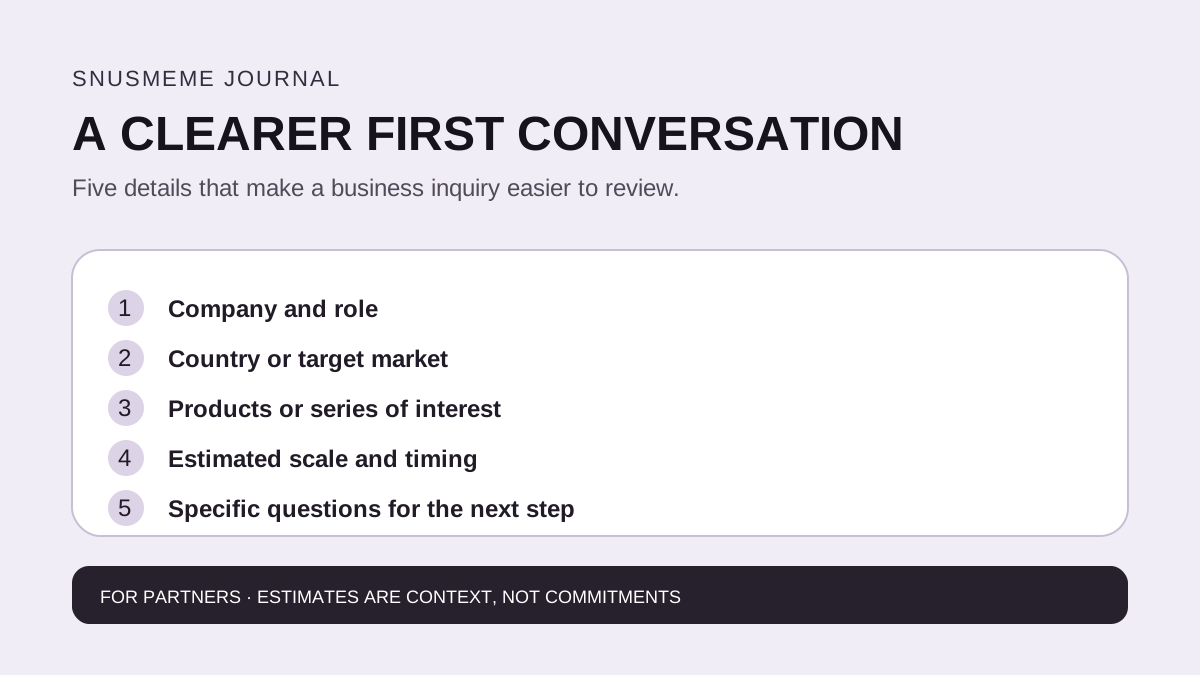
- Your company, role and preferred contact details.
- The country or region and business channels you are considering.
- The flavor directions or collection that interests you.
- Your project stage, estimated scale and preferred timing, if known.
- The specific questions you would like answered first.
Keep estimates and commitments separate.
An estimated quantity is useful context; it does not need to be an order commitment. Label assumptions clearly, especially when your plan depends on a later review. If you do not yet know the scale, explain what you need to learn before making that decision.
The same applies to timing and artwork. A preferred launch window or a packaging reference is a discussion point. Final availability, commercial terms and any production schedule need to be confirmed for the actual project.
Finish with a specific next question.
A focused question makes it easier to plan the next exchange. You might ask which product information is available to review, what details are needed for a project assessment or how to organize a discussion about your market.
Keep the first message readable. Share the information needed to understand the opportunity and leave space for follow-up. A useful inquiry opens a conversation with a clear context and an achievable next step.